
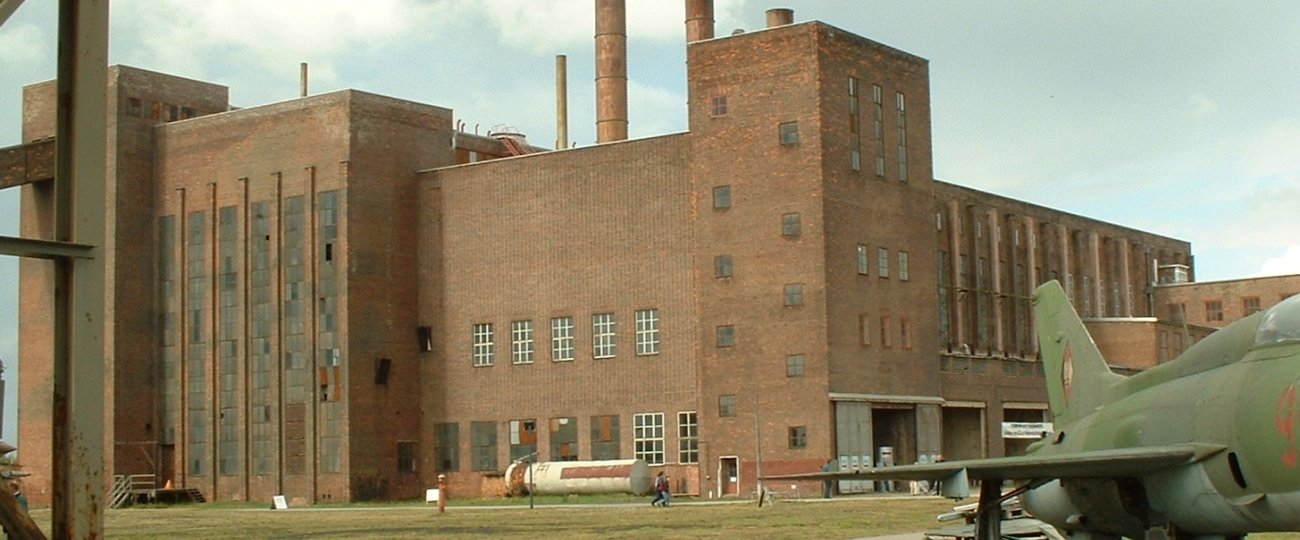
The Peenemünde Historical Technical Museum (German: Historisch-Technisches Museum Peenemünde) is located on the island of Usedom, in the German state of Mecklenburg Vorpommern. The museum was founded in 1991 and is housed in the former power station and observation bunker at Peenemünde.
The museum tells the story of the former Peenemünde Army Research Centre and the Luftwaffe test site known as Peenemünde West. Between 1936 and 1945, these facilities were used to develop and test rockets and missiles for the German armed forces. One of the main subjects of the museum is the development of the V1 flying bomb and the V2 rocket, as well as the people who worked there and the prisoners who were forced to take part in the production.
In January 2007, the museum became part of the European Route of Industrial Heritage. This is a network of important industrial sites across Europe. Peenemünde is included in the routes covering energy, transport and communication.
The museum attracts many visitors, including school groups. In 2008, around 222,000 people visited the site. Over the years, several million euros have been invested in the renovation and expansion of the museum.
The museum has also received international recognition for its work. In 2002, it was awarded the Coventry Cross of Nails, a symbol of peace and reconciliation. In 2013, it received the European Union Prize for Cultural Heritage, also known as the Europa Nostra Award.
Today, the museum offers visitors an opportunity to learn about one of the most important and controversial centres of German rocket development during the Second World War. It also helps to remember the human cost behind these technological developments.