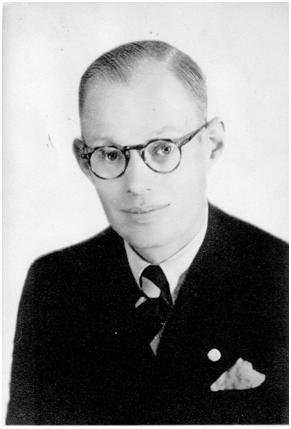
Johannes ter Horst was born in Enschede on 1 April 1913. Before the war, he was simply a baker in the city. He had a wife, a home and an ordinary working life. But when the Netherlands was occupied by Germany, his life took a very different direction. Ter Horst became involved in the resistance, partly because of his Reformed Christian beliefs. He began helping people who were hiding from the Germans and assisting Allied airmen who had ended up behind enemy lines. In 1941 he met Geert Schoonman, and the two would become close colleagues in the resistance.
As the occupation continued, Ter Horst became one of the leading figures of the resistance in Twente. He eventually led the Knokploeg Enschede and later helped lead the KP-Twente. These groups carried out dangerous operations to help prisoners, resistance members and people in hiding.
One of the first major actions took place in Almelo in January 1944, when resistance members broke into the prison and freed two important prisoners. A few months later, Ter Horst was involved in the much more daring prison raids in Arnhem. On 11 May 1944, he helped free Frits de Zwerver, an important figure in the resistance who knew the identities of many resistance workers. Another large prison raid followed in Arnhem on 11 June. Behind these actions was a man who was constantly taking enormous risks. Every operation meant the possibility of arrest, torture or death, not only for himself but also for the people around him.
In September 1944, that danger finally caught up with him.
Ter Horst had married Hermina Schreurs on 6 September 1944. She was also involved in the resistance as a courier for the KP-Twente. They had been married for only a little over two weeks when Ter Horst was arrested in Almelo during the night of 22 September.
He did not surrender easily. During an attempt to escape, he shot a German soldier and managed to get away, first by bicycle and later on foot. He was eventually wounded in the leg and captured again.
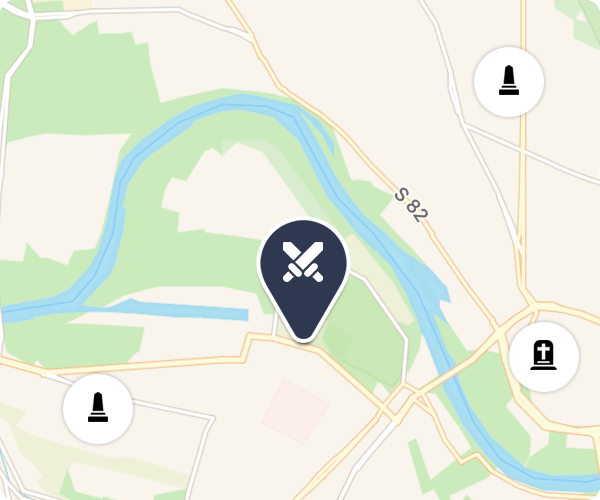
The Germans decided that Ter Horst and fellow resistance member Roelof Blokzijl would be executed. On 23 September 1944, only a day after his arrest, the two men were taken to the heath near Usselo and shot.
Ter Horst was only 31 years old.
It is easy to remember someone like Ter Horst simply as a resistance leader, but there was more to him than that title. He had been a baker, a husband and a man living an ordinary life in Enschede before the war changed everything. His decision to become involved in the resistance eventually cost him his life. After the war, his efforts were formally recognised. He was posthumously awarded the American Medal of Freedom and the Dutch Verzetskruis 1940–1945. His name is also included on the Erelijst van Gevallenen 1940–1945.
His memory has remained visible in Enschede and elsewhere. A street in Enschede was named after him in 1947, and another street was later named after him in Almere. In 2021, a memorial was unveiled in Usselo near the place where Ter Horst and Blokzijl were executed. In 2023, a Stolperstein was placed outside his former home in Enschede.